Inside Exelon's Effort to Get the Power Back on for 400,000 Customers
Customers



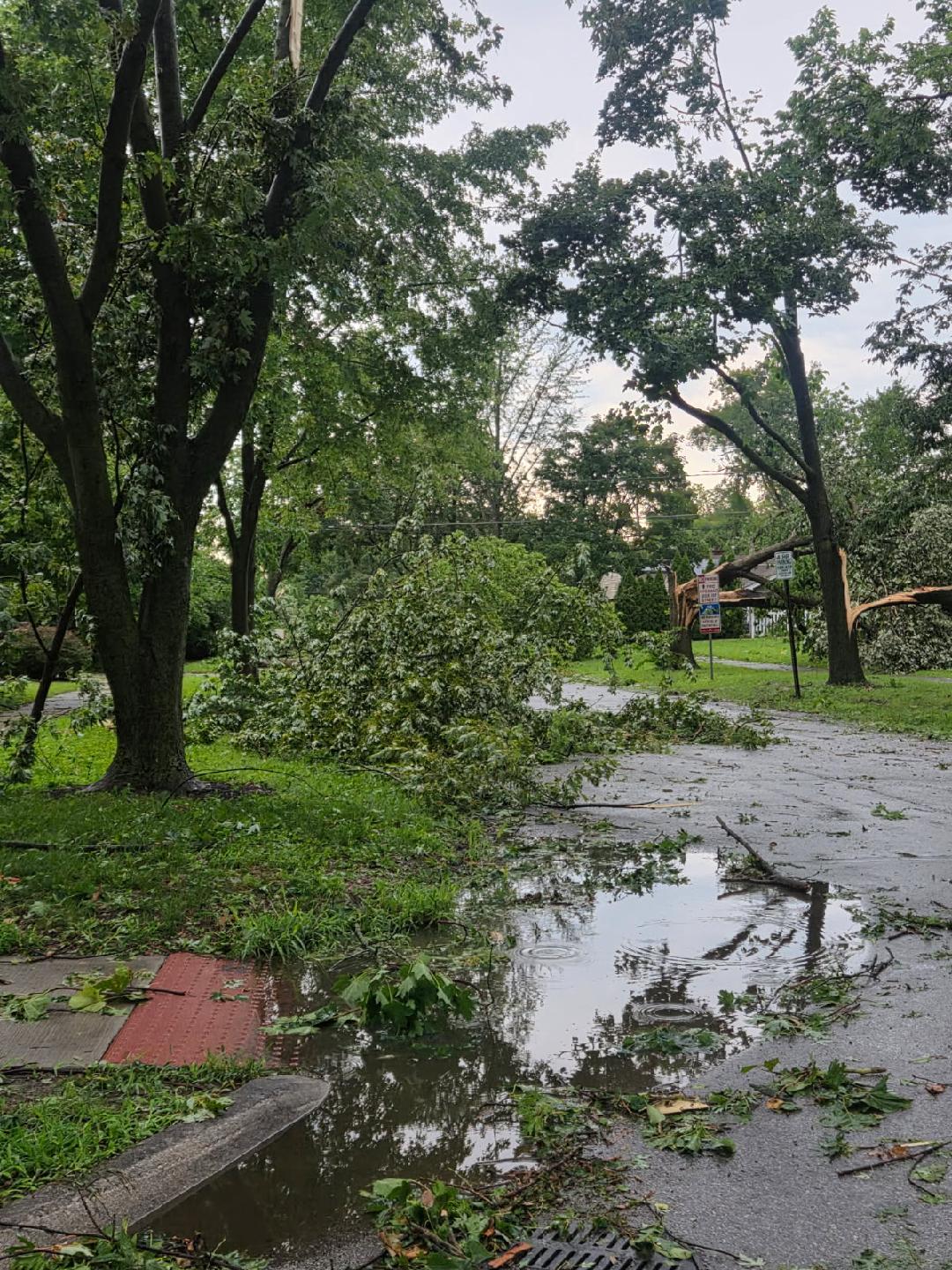
On a hot, muggy afternoon in August in Joliet, IL, tornado alerts blared from dozens of employees’ cell phones inside ComEd’s Operations Control Center. Severe storms were sweeping across northern Illinois. Outside, powerful winds toppled trees and utility poles. The ComEd emergency response teams watched as outages climbed and strategized over how they were going to restore power to hundreds of thousands of people across the service area as quickly and affordably as possible.
The storms came in three waves: the first wave arrived August 9, with eight tornadoes hitting the Chicago area late into the evening. The second wave came two days later, bringing 100 mph winds across northeastern Illinois and northwestern Indiana in what meteorologists call a “ring of fire” pattern, where clusters of thunderstorms circle around a dome of heat for several days. By the end of the week, the third wave had come in the form of torrential rainfall and flash flooding in central Illinois.
“Just when you think you’ve got outages under control, you get hit again,” said David Bunge, senior manager of emergency preparedness for ComEd. Bunge and his team had been monitoring the weather and the outage prediction model for days as the storms approached, anticipating how many external crews would be needed.
More than 750 miles away in Philadelphia, Shannon Rush, a Principal Arranger with PECO, one of ComEd’s sister utilities under the Exelon umbrella, got the call at 8 p.m. on Tuesday, August 11: Would she lead a team of PECO lineworkers and support staff to help ComEd customers and crews? The challenge would entail long hours in storm-damaged areas, facing physically demanding, dangerous work repairing and rebuilding the electric system.
Rush understood the risks she and her crew would be facing, but she didn’t hesitate. “I enjoy the chaos of the storm, helping people get power back on,” she said. Oftentimes, the same storm that tears through Illinois will impact the Mid-Atlantic, making it difficult for ComEd's sister utilities farther East to spare crews. This storm stayed in the Midwest.
Rush packed her steel toe boots and personal protective equipment, ensured her dogs were squared away, and prepared to meet her co-lead, Keith Wiest, at 6 a.m. the next day.
After a fleet inspection and safety briefing with 26 lineworkers and 14 management and support staff — including fleet technicians, safety personnel, supervisors, and foremen — the caravan was off, a line of bucket trucks heading west on I-76, with Rush and Wiest bringing up the rear.
“The first step of the job is, ‘OK, we’re going to drive hundreds of miles,’” Rush said.
A wave of storms
Up and down the East Coast, crews from Exelon utilities Atlantic City Electric, Delmarva Power, and Pepco were making the same journey, after getting the call from ComEd Tuesday night that the anticipated outages in the Chicago area were mounting: mutual assistance was going to be essential.
“The decision we have to make is, ‘Could we restore 400,000 customers with just the resources, just the linemen we have on property?’ We absolutely could, but that restoration is going to take like two weeks, and that is not acceptable,” he said.
Many factors go into the decision to send mutual assistance, including: Are the other utilities anticipating any bad weather? And, crucially, can they spare additional crews and keep their own systems running smoothly at home?
Once emergency preparedness leaders made the call, Jamie Gaddis took up her position as an external crew mobilization assistant inside the ComEd Operations Control Center in Joliet. In addition to calling Exelon crews, Gaddis was also working to enlist the help of independent contractors and “nonnative” crews.
At one point, Gaddis and her colleague stepped outside to stretch their legs and see what the storm looked like. The air outside was calm, but thunder rumbled nearby.
“It was terrifying. The sky was a green color that I’d never seen before, “Gaddis said.
After a quick lap around the building, they made their way back into the control center. Within a minute of being inside, tornado warning alerts buzzed on everyone’s phones.
As people streamed into the tornado shelter, someone pulled up a live storm chaser feed on one of the large screens. Gaddis noticed with alarm that one of the tornadoes was 10 minutes from her house. As she continued working, she called her husband and kids.
“I was just watching it like ‘Oh my gosh, I can’t even imagine what they are going through,’” she said.
Outside, frontline crews were taking cover where they could. One ComEd lineworker, Charles Cook, sheltered beneath a viaduct near Interstate 80 as tornado warnings flashed across his phone.
"Once I emerged from the viaduct, seeing all the trees down everywhere, it was just mass destruction," he said. "Trees blocked roads, wires were down, poles were down and the fire department was everywhere."
Cook said it was the worst storm damage he’s ever experienced in 29 years at ComEd.
“I saw a house that was open like a dollhouse," he said. "You could see everything inside. I saw a large tree fall on someone's house, the roof was gone."
Getting the lights back on
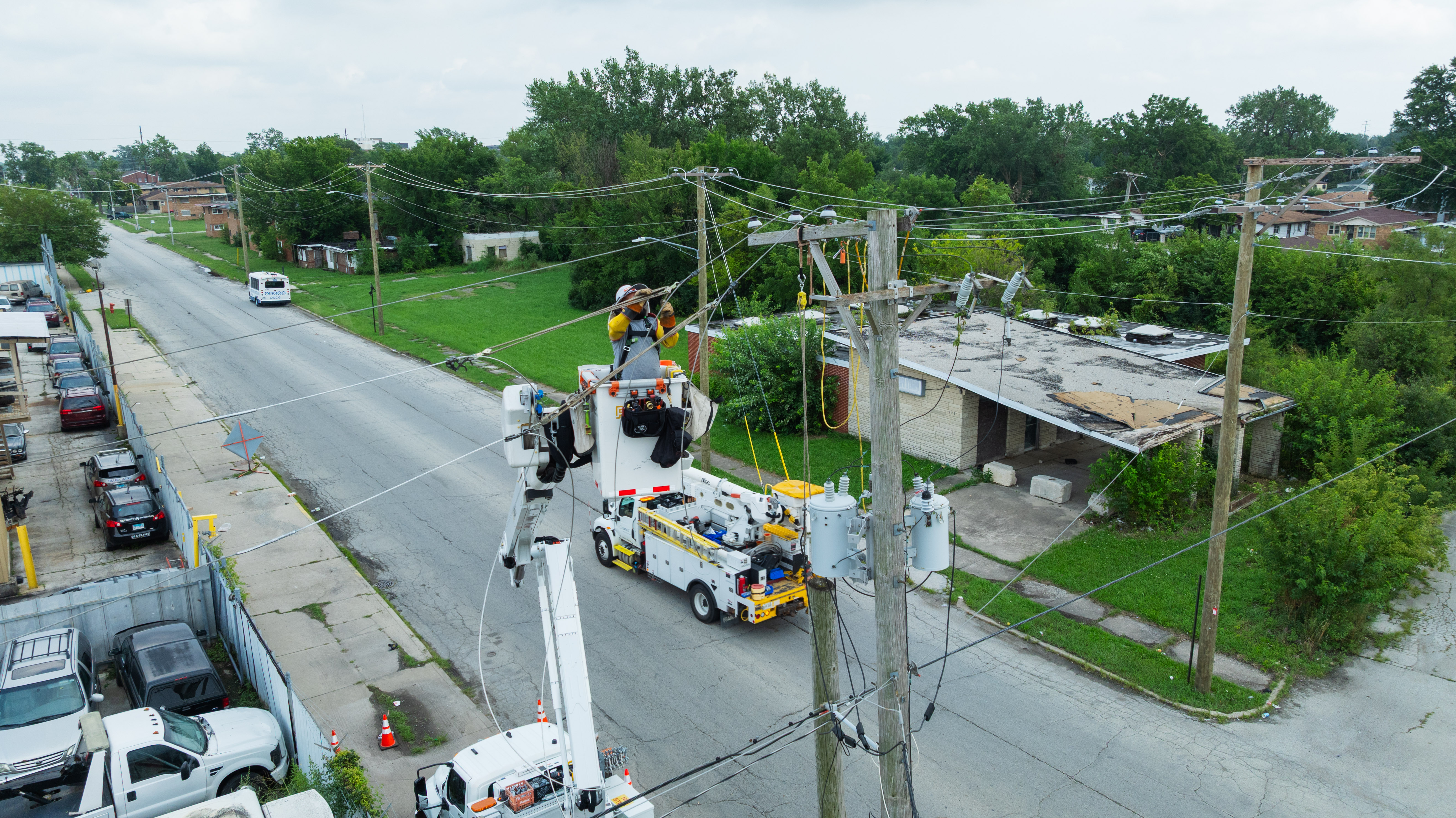
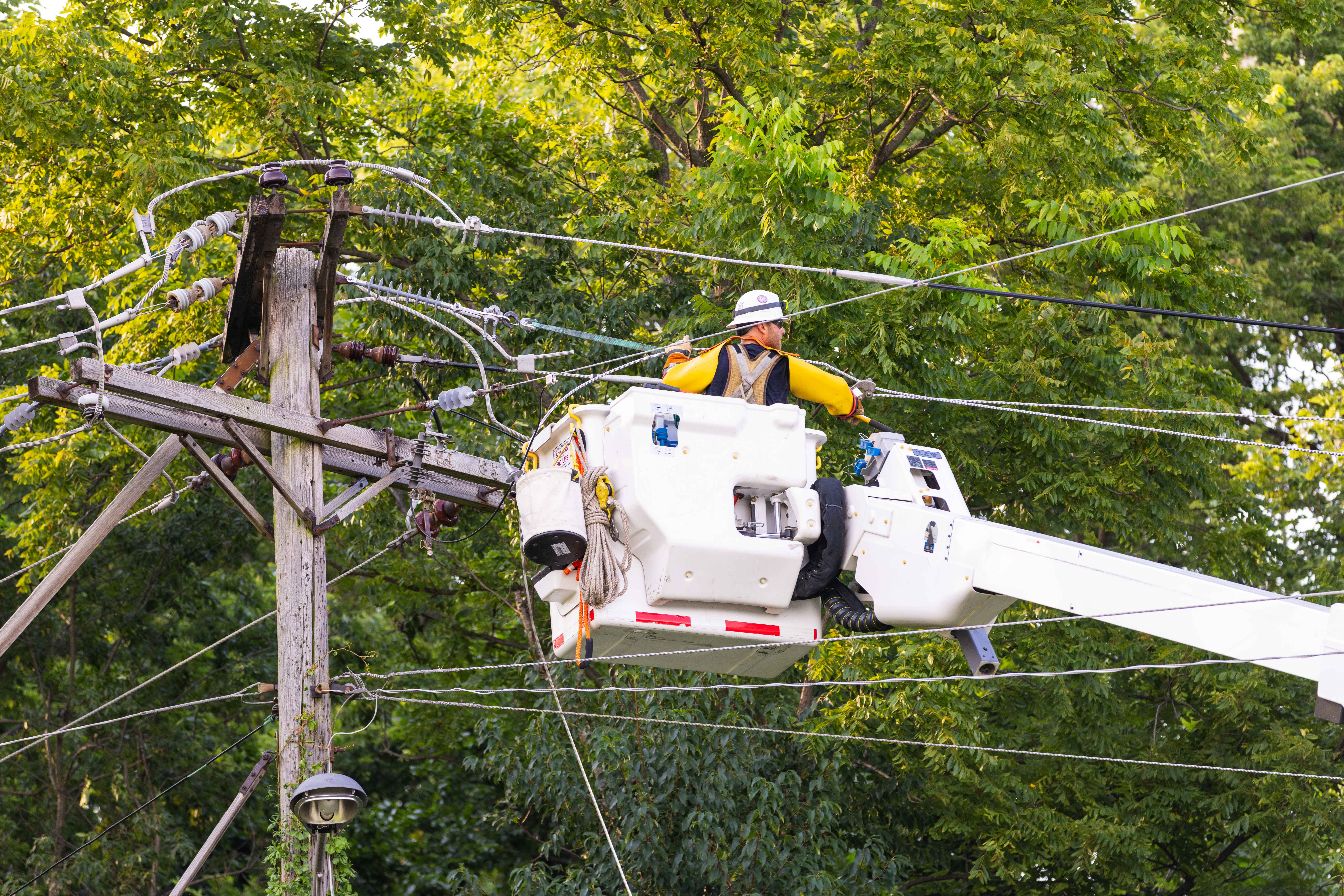
Meanwhile, somewhere along I-76, Rush drove while Wiest made calls, making sure the PECO crews had hotel rooms ready for them in Ohio — the halfway point — and checking in with their ComEd counterparts. Arriving at the temporary basecamp set up in Joliet Junior College’s parking lot Thursday morning, the PECO crews met their ComEd liaisons, ensured they were able to get on ComEd’s outage management system and started assigning tickets work orders that tell a crew the outage’s location and type of outage.
The days were long — 16-hour shifts with 8 hours to rest. Much of the work relied on vegetation teams, which are crews tasked with cleaning up the downed trees, branches and debris, before lineworkers could do the electrical repairs. Wiest and Rush made sure crews had what they needed, navigating around downed trees and high water to bring materials and supplies, including bug spray and boot dryers, to lineworkers working in heavily wooded and flooded areas.
Most days, crews dispatched separately to jobs. But one particularly complex outage — affecting about 500 customers — had all 26 PECO lineworkers and their support staff working together to repair 12 downed poles and 30 spans of wire, a job that typically takes two days but only took one.
“It was just really cool to watch the DelChester, Philadelphia, and BucksMont regions all come together and rebuild this pole line,” Wiest said. “[Customers] were really appreciative that we got their lights on. They weren’t expecting to see us or get their lights on as quickly as we did.”
“They didn’t hesitate”
Back at the Operations Control Center, Mike Martin, one of the ComEd system incident commanders, balanced getting power back on for the greatest number of affected customers versus the most vulnerable — including hospitals, water pumping stations and nursing homes. And as the external crews worked to help ComEd lineworkers get through the work orders, customers started getting their power back rapidly.
Because Exelon crews — no matter if they’re coming from Pennsylvania, New Jersey, Maryland or Delaware — are all trained under the same system and safety standards, it’s much easier for ComEd to onboard them onto their system. A Pepco lineworker can read ComEd’s grid maps and see the outages; while “nonnative” or external crews are also properly trained, it takes them longer to integrate into Exelon’s system.
“Part of the relief and efficiency of Exelon coming is their ability to quickly start restoring customers with the standards we all expect. When you’re bringing in nonnative crews, you have to do a lot more managing and setting up systems to keep them productive and functioning,” Martin said.
Martin recalled a particularly difficult restoration in the University Park area: when the crew arrived, they discovered the utility pole they needed to switch was immersed in thigh-high flood waters. Rather than waiting hours or days for the water to recede, the crew determined the area was safe and immediately slipped on gaiters and waded out to work.
“They didn’t hesitate,” Martin said. “They came up with the plan, and they went and executed it. So much of storm response relies on the crews making decisions on the spot in how best to safely restore our customers.”
By August 15, only three days after the third powerful storm hit, ComEd has restored power to 99% of its customers. In total, more than 4,500 personnel, contractors and mutual assistance crews supported the storm response that week.
Cook, who lost power at his house for two days as he worked 16-hour shifts to restore electricity, said adrenaline and knowing he was helping people kept him motivated.
“It’s nice when I pull up to an area and the lights are out and I do my thing, and as I drive away customers are cheering, ‘Thank you ComEd,’” he said.
Mobilizing thousands to turn power on
On Monday, August 17, the PECO crews wrapped up their work and were given the all-clear to head home. Most of the restaurants near their hotel in Ohio were closed that night, but the hotel restaurant was able to accommodate all 40 of them.
“It was kind of cool because we were there and nobody could go anyplace else, so we kind of stuck together for dinner,” Rush said. “It was almost like a, ‘We did it, attaboy’ dinner.”
Bunge, the ComEd emergency preparedness senior manager, finally enjoyed more than just a passing moment with his wife and child after seven straight days of working the 5 a.m.-5 p.m. shift inside the control center. He knows he’s not in the clear — Illinois has recorded 207 tornadoes so far this year, more than any other state.
And after power was restored to ComEd customers, the utility sent 60 of its own employees to northwest Indiana to help NIPSCO, the local utility, with its restoration efforts. ComEd crews will likely travel east several times a year if they can spare crews to support other Exelon utilities as well.
“I don’t know of any other industry besides the military that mobilizes thousands and thousands of people like this to help each other out,” Bunge said. “It’s an amazing thing that we do.”