How Exelon Rewrote the Rules on Data Centers to Protect Customers
Customers


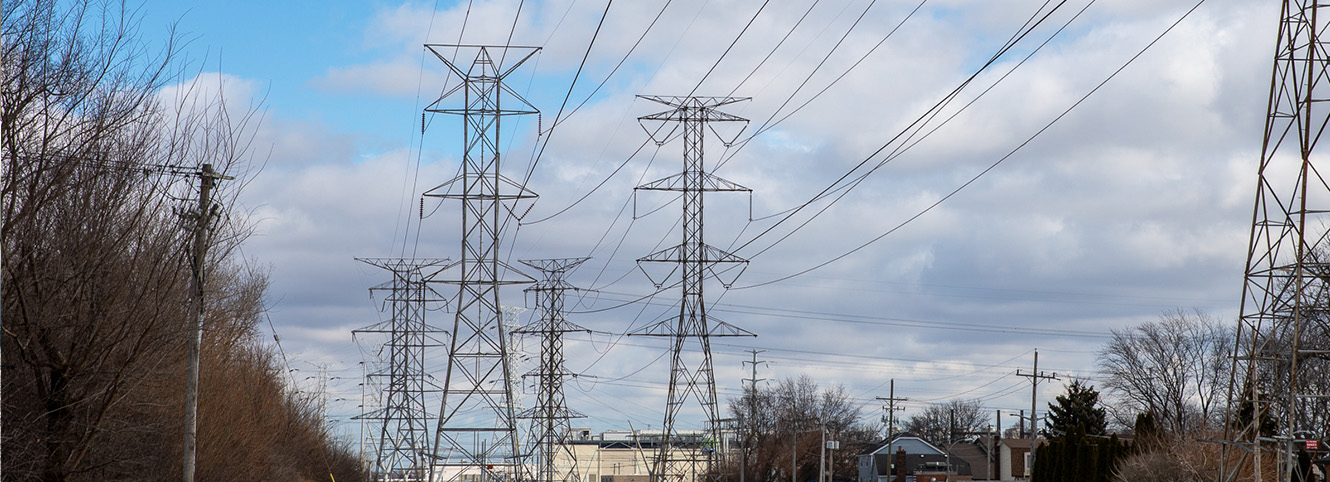
AI companies are racing to build data centers across the country. They can bring jobs, investment and growth to communities. But big energy customers, like data centers, require large investments from utilities. Without safeguards for everyday customers, speculative developers can ask utilities to make investments to provide service to projects that never get built and leave regular customers to pick up the bill.
That’s why Exelon created Transmission Security Agreements (TSAs) to protect customers like families and small businesses. They require developers to pay if they walk away from a project, or if it moves forward, and they don’t pay their fair share of electricity transmission costs. As of August 2026, Exelon has used TSAs to secure roughly $1 billion in customer protections.
Here’s how they work: long before a shovel ever goes in the dirt, big energy projects require sizable time and investments from utilities, like engineering studies, land acquisition, substations and transmission lines. But, as Tom Bonner, the director of policy, advocacy and external affairs at PECO said during a Philadelphia City Council hearing, “The rest of our customers should not subsidize data centers.”
Last year, as applications for big energy projects grew exponentially, Exelon’s legal and customer teams saw an opportunity to innovate a new framework that would protect everyday customers. The goal was to ensure that if a developer asked a utility to make major investments in the electric grid, they put real money on the line. That way customers wouldn’t end up paying more if the project fell through, or if the developer didn’t pay their share of electricity transmission costs.
The Exelon teams introduced the first TSA for an Amazon Web Services data center project in Bucks County, Pennsylvania. It was approved by the Federal Energy Regulatory Committee (FERC), and today, TSAs are standard practice across Exelon's utilities.
They require developers to put up collateral — sometimes hundreds of millions of dollars — after the project is studied, and before a project moves forward. And if a developer walks away from a project or they end up using less energy than they had projected, TSAs ensure existing customers are protected.
Putting everyday customers first isn’t always popular. Industry critics argue the added requirements could discourage some projects from moving forward. And some developers don't want an up-front financial commitment. But the 20,000 people who work at Exelon believe families and small businesses shouldn't shoulder the costs when data center developers change their plans. And our view is supported by regulators, advocates and developers who see the benefit in protecting all customers. FERC has taken notice of Exelon’s innovation and recognized TSAs as a pioneering model that should become an industry standard.
The bottom line is this: Exelon is committed to supporting responsible growth. TSAs help weed out speculators who aren’t serious about building and enable those who are ready to drive economic development. As energy demand continues to grow, we'll keep taking on challenges like this with one goal in mind: protecting the pocketbooks of the families and small businesses who count on us every day.