How Exelon is Preventing Outages Before They Happen
Customers


For Exelon, keeping the lights on isn't enough. We also do everything we can to keep energy affordable.
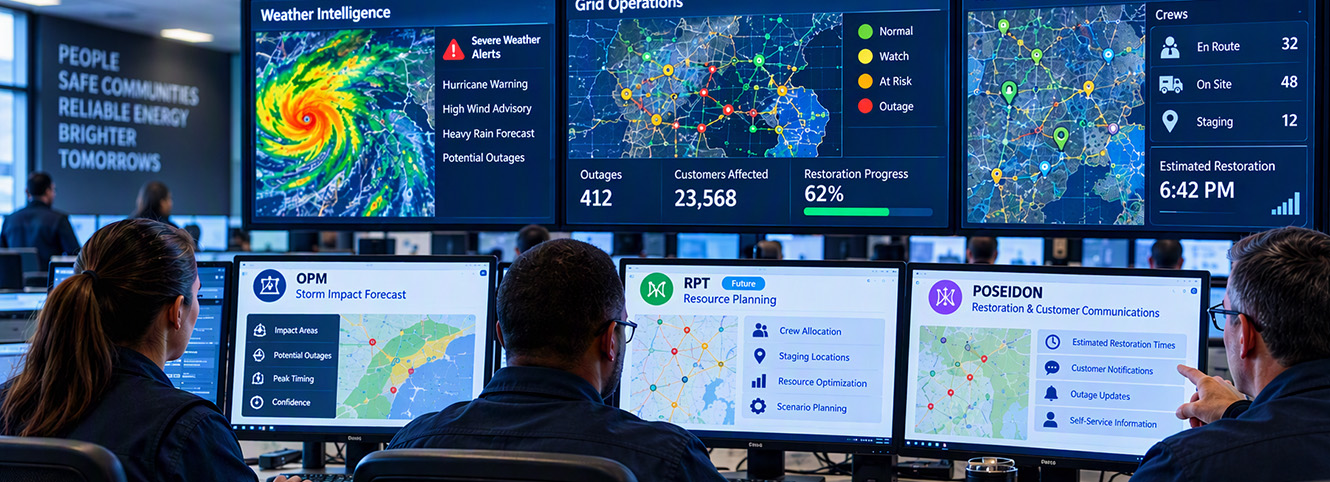
That's why we’re focusing on an innovative new approach called grid orchestration: connecting the technologies, data and tools we’ve invested in, so they work together to anticipate problems and solve them before they lead to outages. Because preventing outages doesn't just reduce disruptions; It also brings costs down for our customers.
Imagine powering an entire city during the hottest day of the year. It requires thousands of pieces of equipment, hundreds of crews, accurate weather information, and dozens of control room operators. We have to gauge how much electricity customers are likely to use, what maintenance or upgrades are underway, and if there are any downed lines or potential problem areas. If any part of that system operates in isolation, the risk of customers losing power increases.
This is where grid orchestration comes in. Just like a conductor helps dozens of musicians play together as one orchestra, Exelon is connecting information, technology, infrastructure, and people across operating companies. Using drone technology, advanced sensors, predictive analytics and real-time grid monitoring can help different parts of the electric system work together so that we can identify potential problems and work to solve them before they lead to an outage.
As Laura Randle-Smith, vice president of Exelon Infrastructure, explained during her keynote address at the DistribuTECH Reliability & Resiliency Conference in Chicago, in August, “The goal is not simply to understand what happened; it's to better understand what is likely to happen.”
In practical terms, that means using advanced monitoring tools to detect equipment that may need maintenance before it fails; analyzing weather forecasts alongside grid conditions to position crews and resources ahead of a major storm; and using data to better understand how electricity moves through the system so control room operators can make decisions that improve reliability while keeping costs down.

Those capabilities don’t just help prevent disruptions. They also help Exelon make more targeted investments, deploy resources more efficiently and avoid unnecessary costs.
As Randle-Smith explained, “The opportunity is not to build a smarter grid. The opportunity is creating a system that continuously learns, adapts and responds. One that anticipates needs before they become disruptions. One that delivers resilience while maintaining affordability. One that provides customers with greater confidence in the energy system that supports every aspect of our modern lives.”